
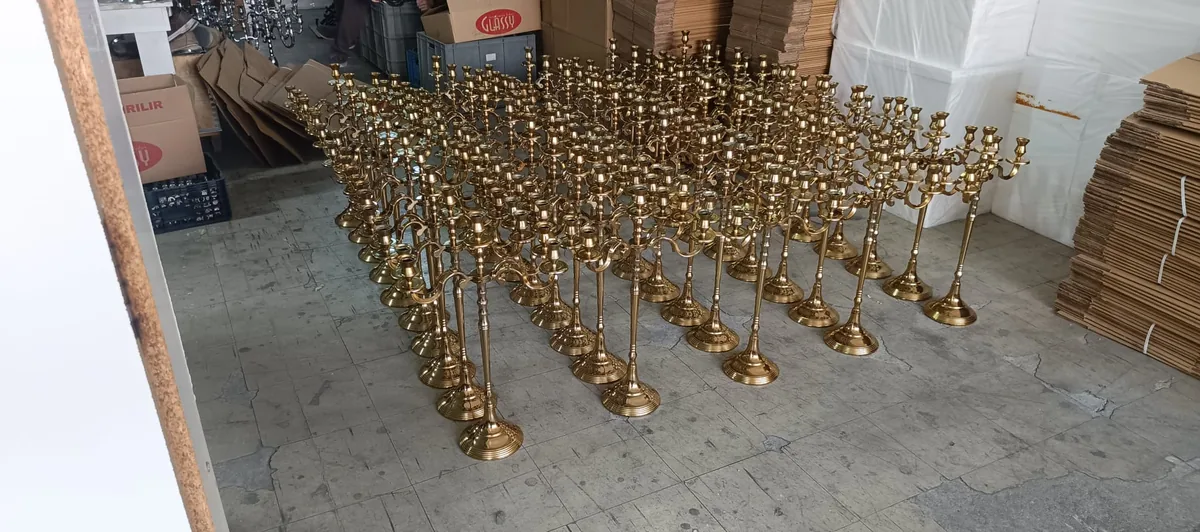
Consider the completed object, not just one part
A neat individual surface does not replace checking the assembled product. The relationship between base, stem and arms must be considered together. This explains the purpose of a separate inspection stage; it is not an instruction for operating machinery or adjusting mechanical connections.
Assessing stance requires an appropriate level surface. If there is unusual wobbling, obvious misalignment or looseness, contact the manufacturer before use. Ask for model-specific advice instead of forcing a connection, tightening it arbitrarily or substituting a part from another model.
Read appearance against the order record
Final inspection considers general surface appearance and the fit of components. The buyer can compare model name, candle count, size and selected finish with the confirmation. A photograph is useful evidence, but a single angle cannot reveal every connection or component.
When reporting an appearance difference, provide both an overall view and a detailed image. Explain what you see so a reflection is not confused with physical damage. Request the manufacturer's assessment before applying chemicals to a coated surface or replacing a component.
Confirm packing and delivery checks
Before dispatch, confirm that model, finish, quantity, set components and shipping configuration match the order. Ask whether items will arrive assembled or appropriately separated. Packing and reassembly information should reflect the actual construction of the selected model.
At delivery, check the visible condition of packaging and products; report differences with order details and explanatory photographs. Production inspection cannot guarantee that transport damage will never occur. Establish beforehand how damage reporting and delivery responsibilities are defined in the current commercial terms.