
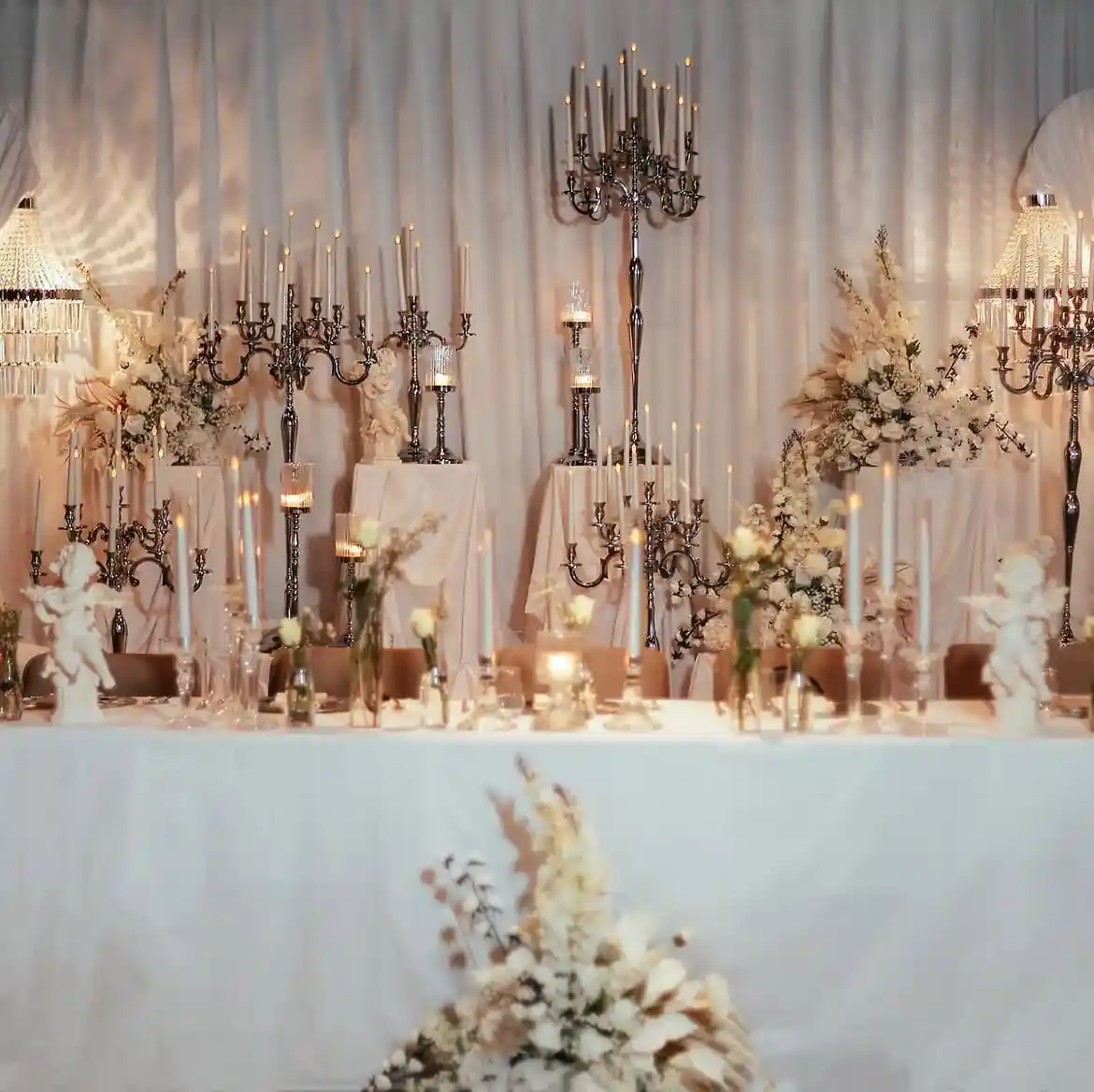
Start with the space, not the product name
List guest tables, welcome areas, stages and passageways separately. Their table sizes, sightlines and service requirements differ. A statement piece seen from across a room should not be selected using exactly the same criteria as a centrepiece beside seated guests.
Count the candelabras, vases and candleholders you already have in usable condition. Separate their sizes and finishes. This makes it easier to see whether a proposed purchase complements the collection or merely repeats an existing model with a similar appearance.
Test variety through complete arrangements
Consider a tall focal piece alongside lower candleholders or glass details. This is not a compulsory combination; it is a way to assess the whole table and preserve space for service. Comparing isolated product photographs is not enough to settle the layout.
Prepare a sample table plan with flowers, plates, linen and lighting included. Discuss whether a smaller selection serving different layouts would suit your business better than many models doing the same job. The right mix depends on the events you actually deliver.
Base quantities on your calendar and workflow
Overlapping bookings and return schedules affect the number of items needed. Do not assume a piece returning from one event is immediately ready for another. Include your actual inspection, appropriate cleaning and repacking process when reviewing availability.
There is no universal spare-stock percentage or fixed formula per table. Review previous usage, current condition and the proposed layouts together. Divide the enquiry into model, finish and quantity lines, then confirm final quantities against the selected products and current commercial terms.


