Decide what should lead
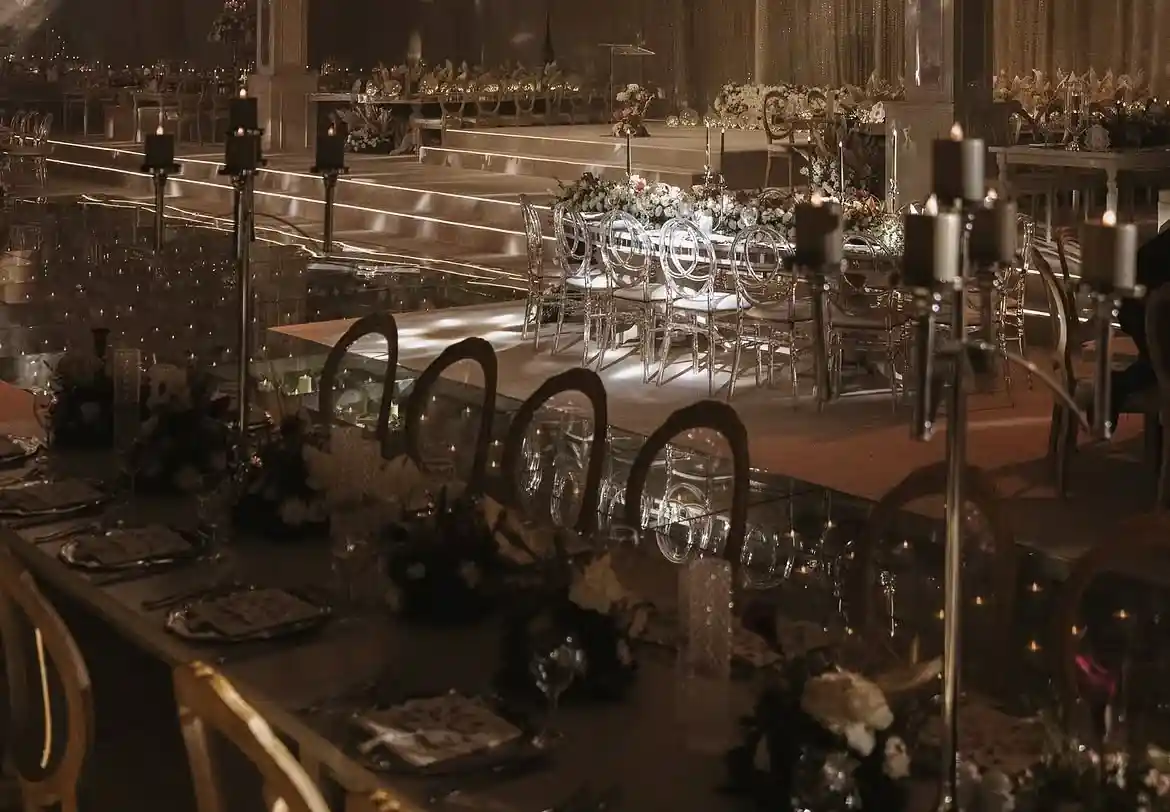
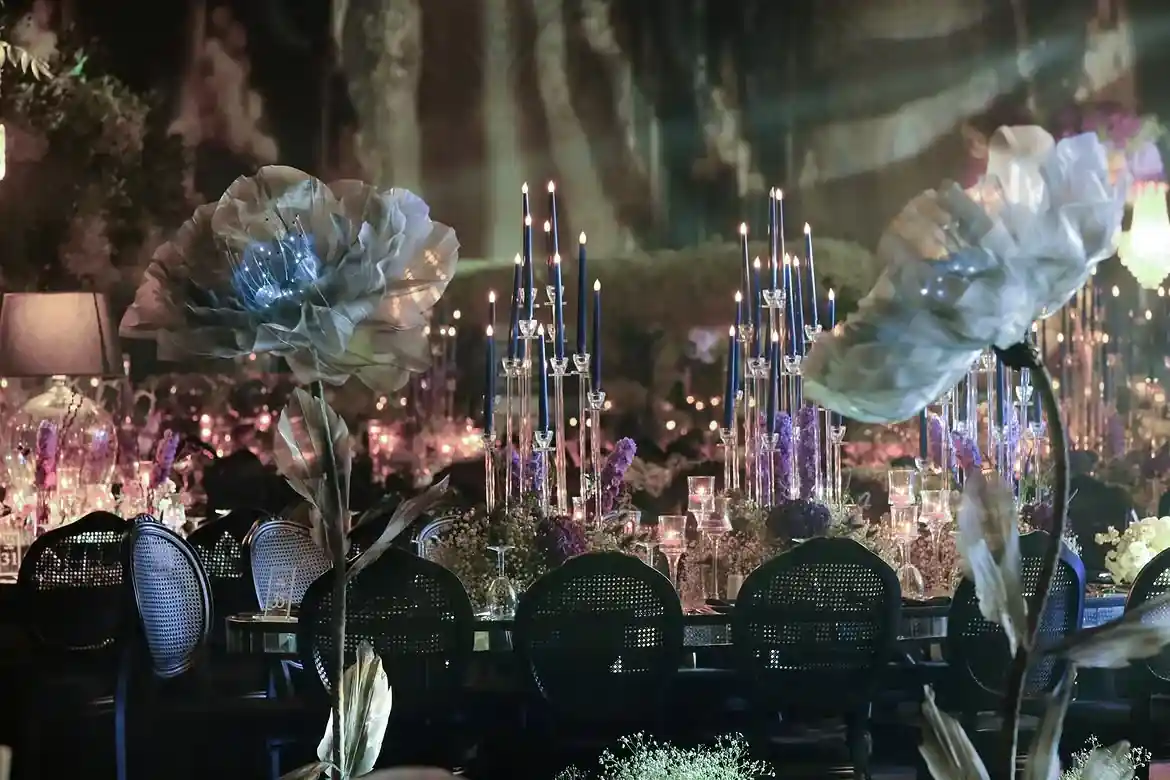
What should someone notice first: the flowers or the candelabra's outline? If flowers lead, try quieter surrounding accessories. If the arms of the candelabra are the feature, arrange flowers without completely concealing that outline. Liking each object individually does not establish that they tell a coherent story when placed together on the finished table.
Compare silhouettes, not just heights
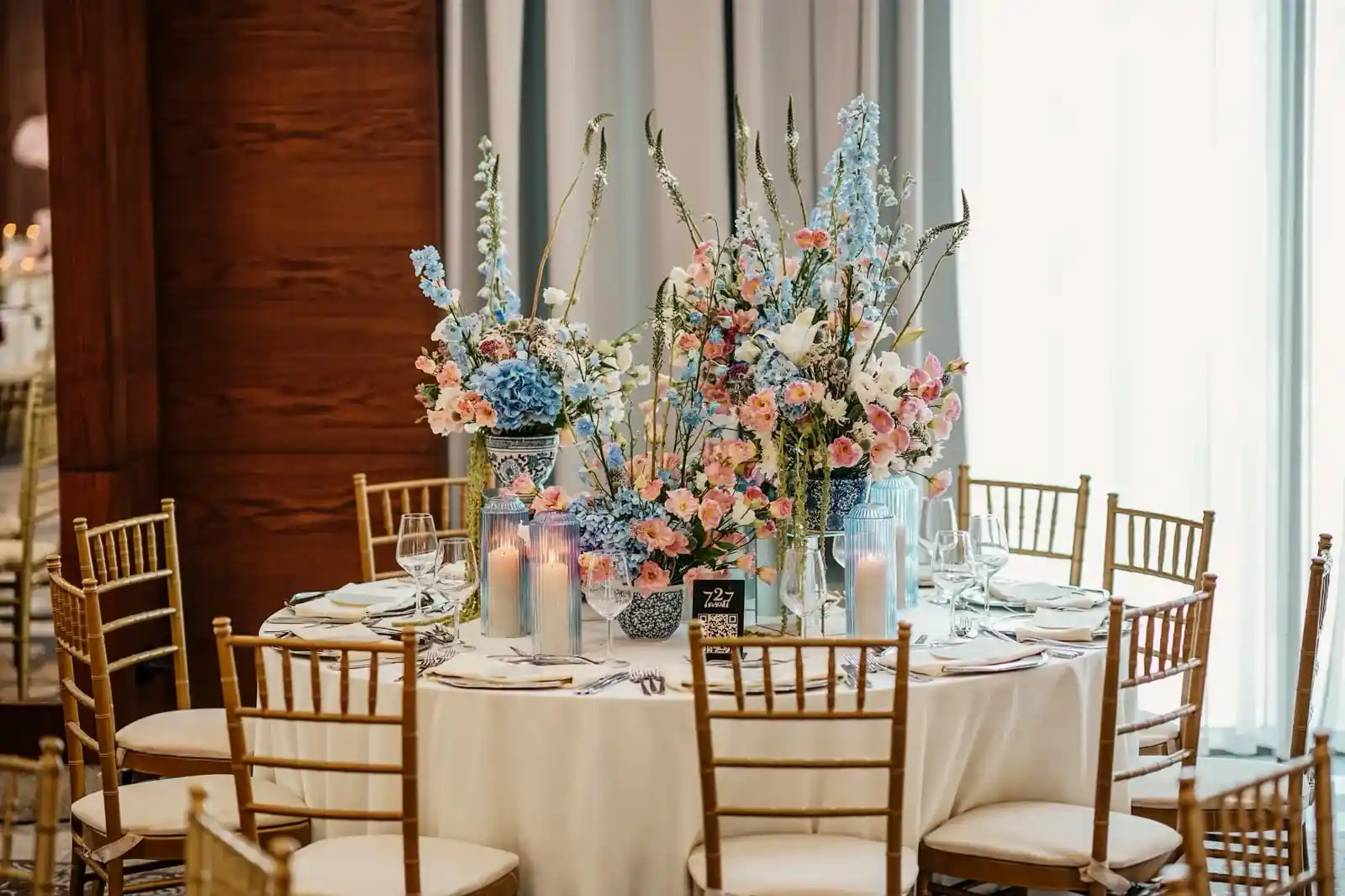
Assess the vase filled with its intended arrangement, not only the empty vessel. Even objects of different heights can become crowded where flowers spread into the candelabra's arms. Take a side-on photograph to see what disappears behind something else. Before adding another product, try moving the existing vase or simplifying the flowers and compare the alternative.
Keep some space deliberately empty
Every gap need not contain a small candle holder. Plates, glasses and the table number also contribute to the scene. Lay out the real service pieces and reserve the areas needed for shared dishes. If reaching an accessory requires moving the others, simplify the composition. A visually full table and a useful dining table are not necessarily the same thing.
Make the arrangement readable for the team
Keep a full-table photograph, overhead view and item list together. Identify which vase belongs to each floral group without estimating dimensions from the photograph. Give the florist and setup team the same reference. Related catalogue models are starting points for selection, not a claim that every pictured accessory is included or that separate items can be physically assembled together.