Draw the working table first
Sketch a simple overhead plan with chairs, plates, glasses and any shared serving dishes. Mark the space left for decoration. A composition that fits an empty table may stop working when the place settings arrive. Include the table number, menus and somewhere for personal belongings; the table's outside dimensions alone do not describe its usable centre.
Treat a round table as an all-round composition
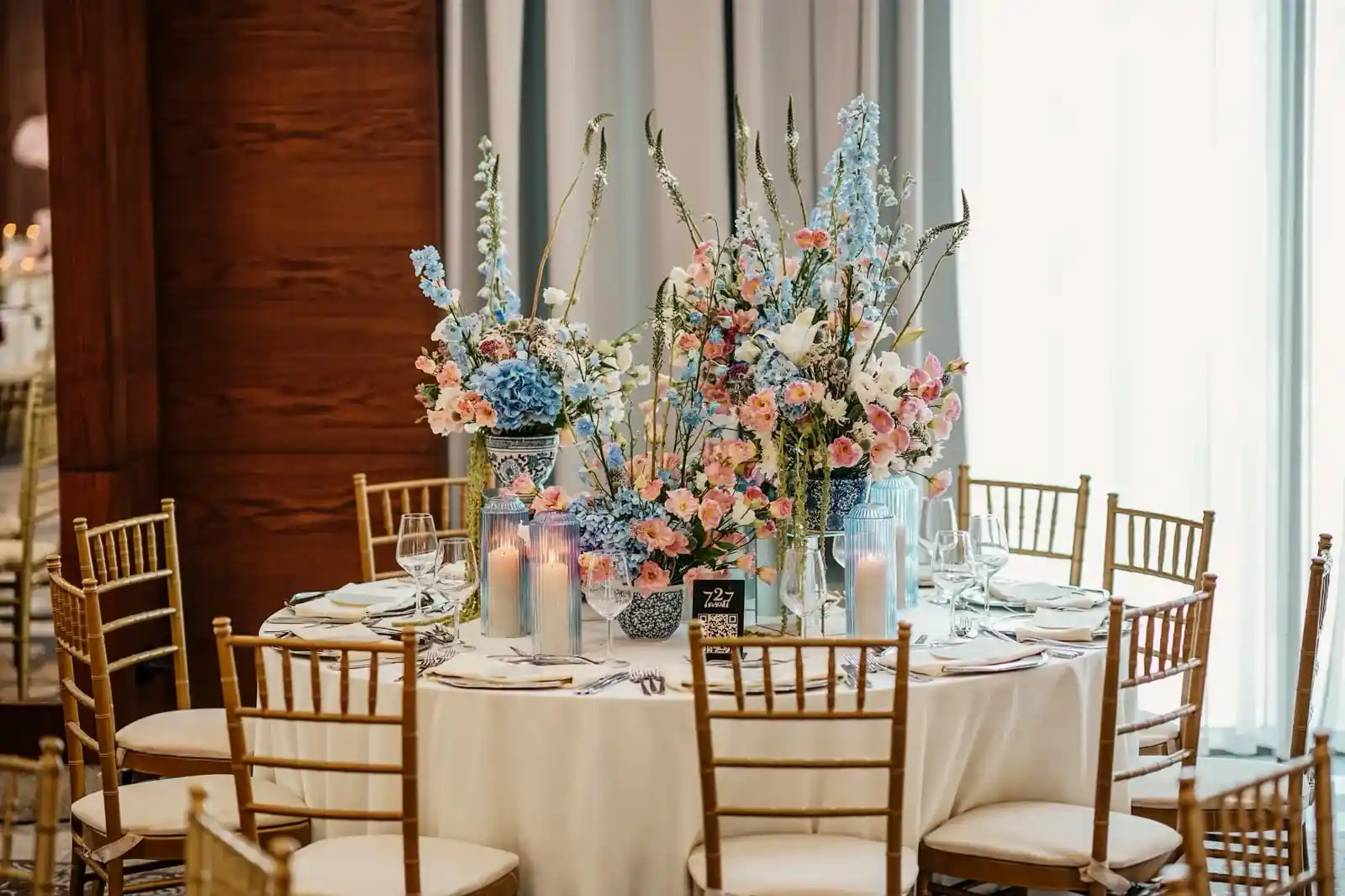
A round table has no single front. Look towards the centre from several chair positions, including the backs of floral arrangements and visible product connections. Choose one shared focal point and try smaller pieces in supporting groups. Exact symmetry is optional; the aim is to avoid giving one guest only the unfinished back of the display.
Give a long table a repeated rhythm
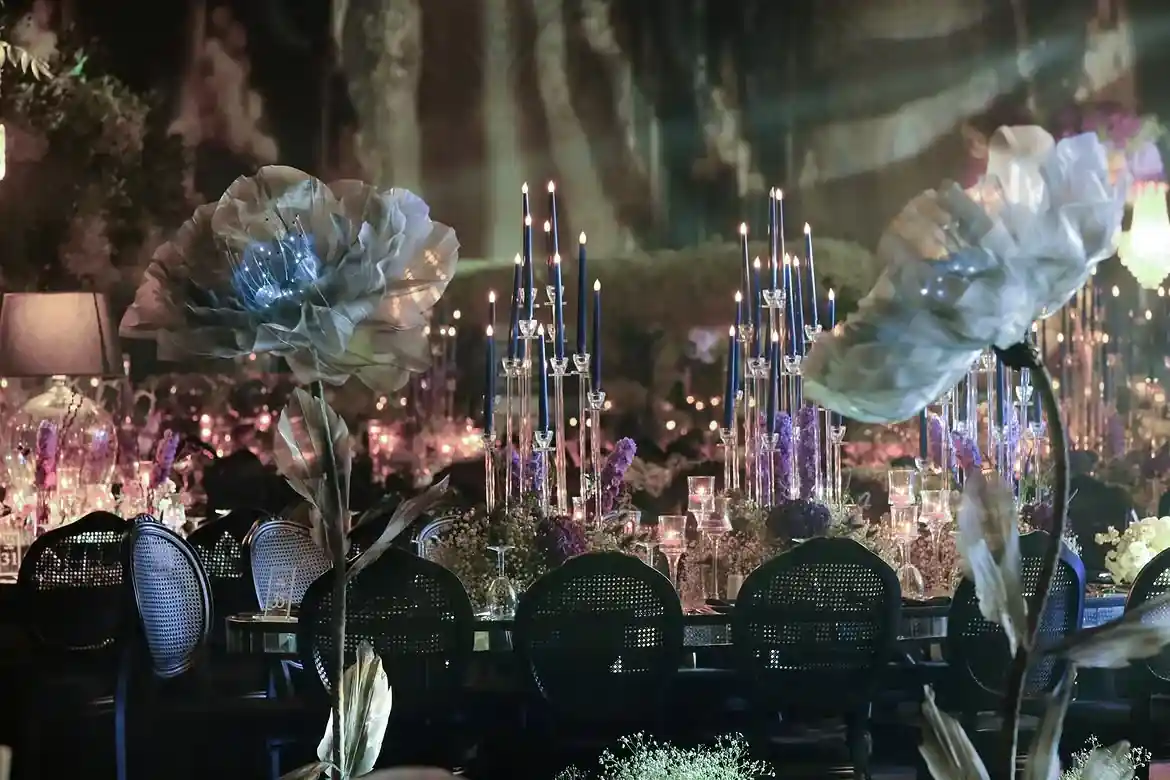
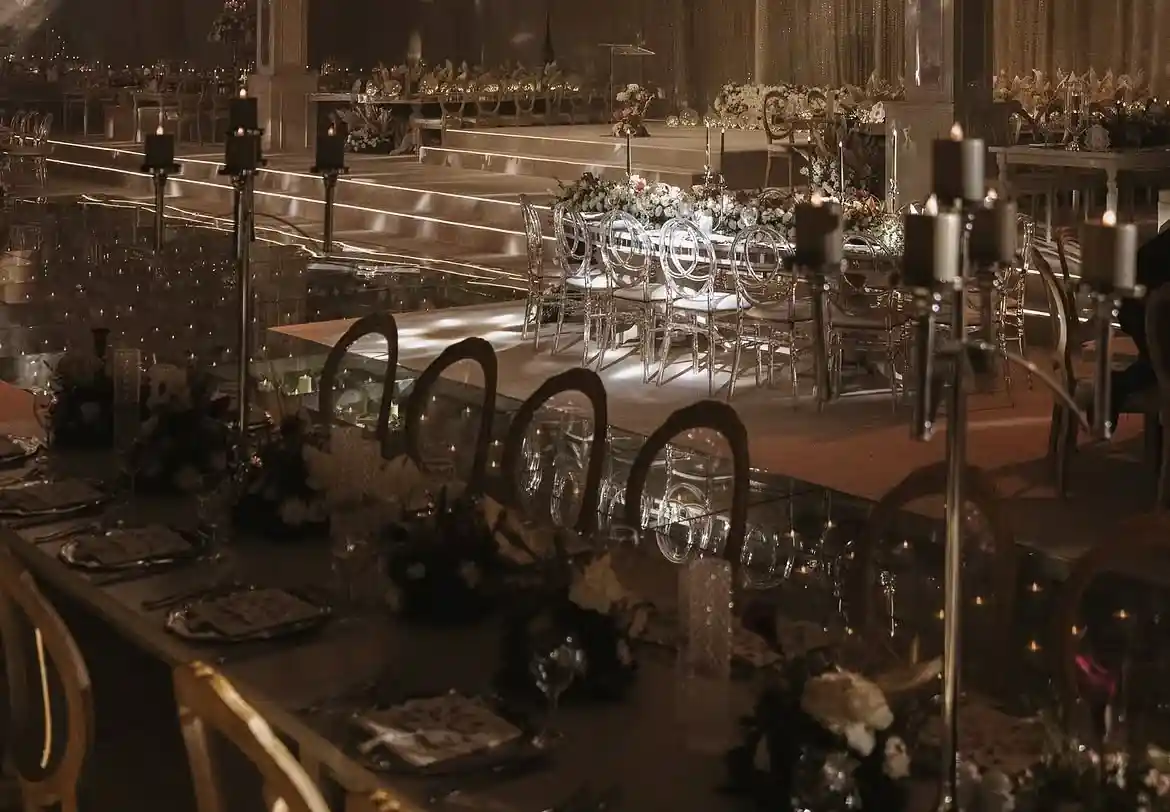
Instead of one oversized centrepiece, draw smaller clusters along the table. Leave deliberate gaps between candelabras and vases so that serving areas remain clear in the plan. Account for table joins and guests seated at the ends. You could repeat a common shape while varying floral density rather than making every cluster an identical copy.
Review the plan from a chair
Build the arrangement with the actual place settings and sit opposite another person. Check the view, access to menus and the route used during service together. Photograph the result from above and at seated eye level. In a room with both table shapes, keep a related product family but prepare two different layout references when discussing your selection.