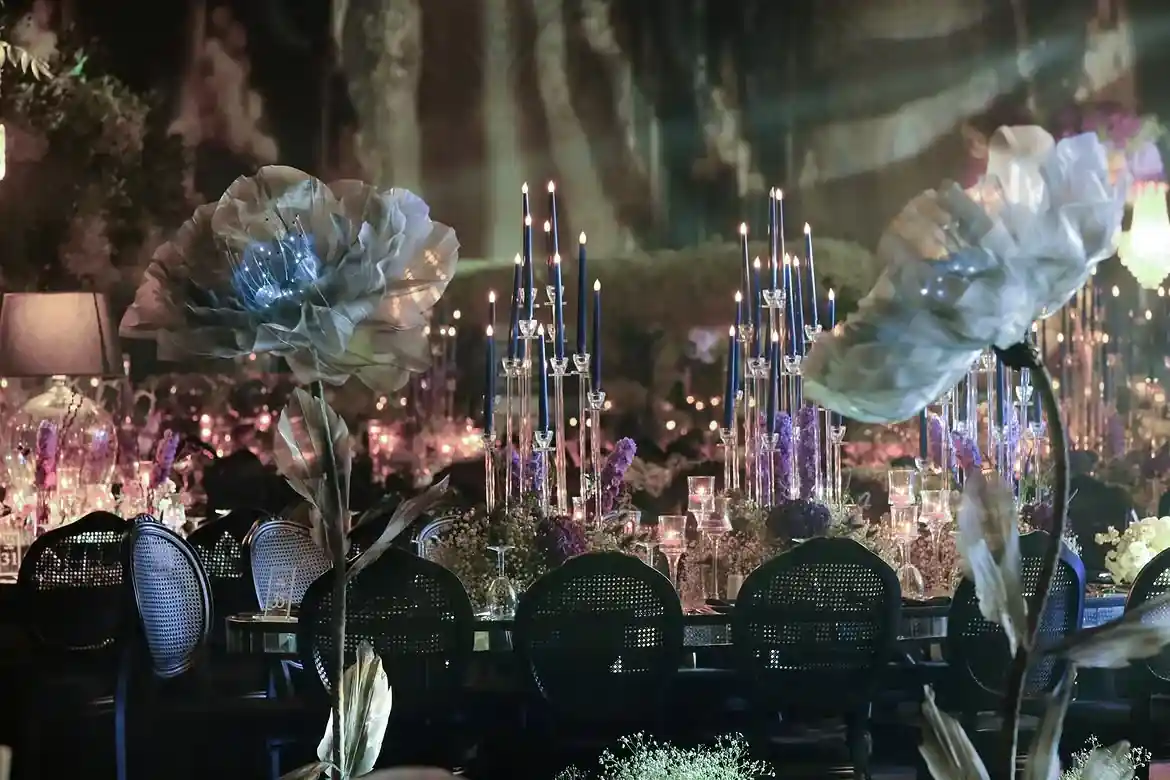
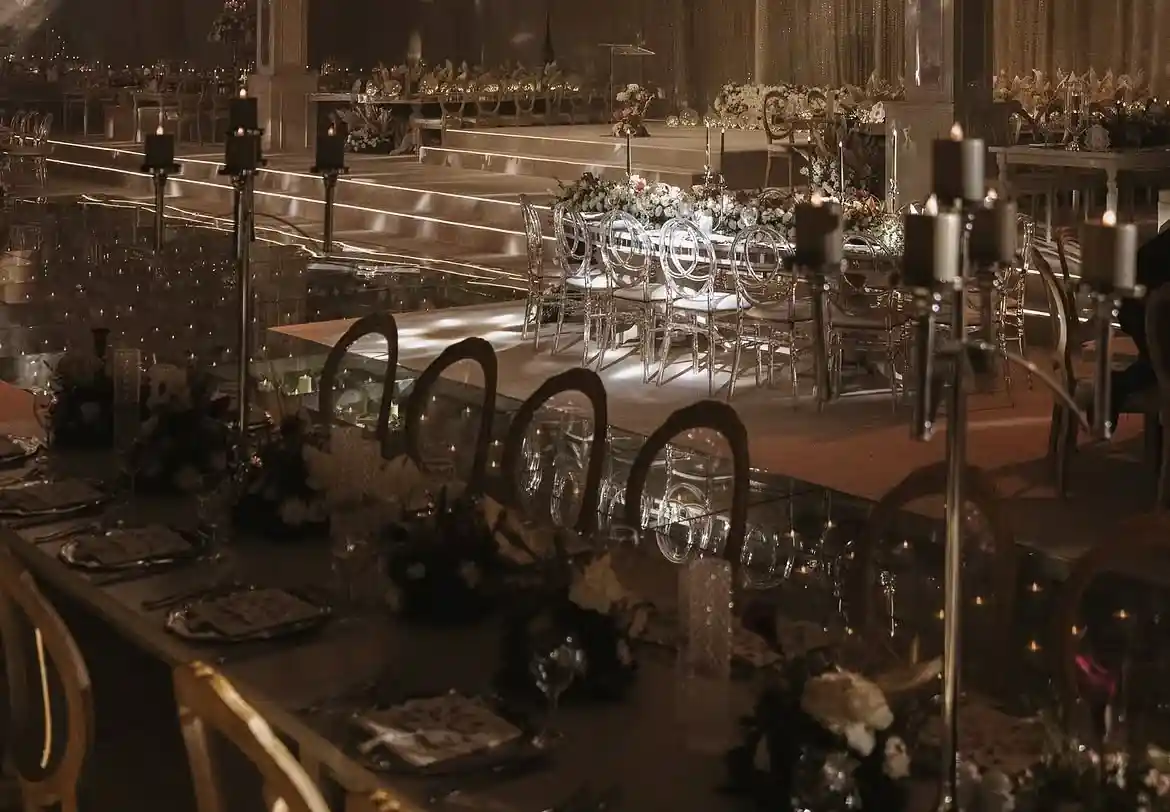
Represent the real conditions
Include the intended table, chairs, linen and service pieces wherever possible. A candelabra on an empty tabletop cannot represent the finished setting. If no product sample is available, mark reserved areas, but label this as a planning sketch rather than a real product trial. Ask separately about sample arrangements and record any missing components in the trial notes.
Bring specific questions to the rehearsal
How does the composition look from different seats? Are the menu and table number readable? Must the decor move when the service pieces are added? Review these questions with the florist and those responsible for service and setup. A criticism does not automatically require another purchase: try rearranging the same pieces first, separating layout decisions from product selection.
Make photographs useful working records
Capture an overhead layout, a seated view and the table's place within the room. Close-ups alone may conceal the overall situation. Keep pictures under the same trial name and date, with links to the products used. Note any flowers or lighting that will change later. Do not transfer measurements inferred from photographs into the purchasing list as verified facts.
Turn the result into an actionable list
Separate the arrangement to retain, pieces to change and questions still open. Give each table type its own approved image and item list; do not simply copy a round-table result onto a long table. Then share selected models and required quantities for a quotation. This is a design decision, not confirmation of product suitability, delivery terms or pricing.