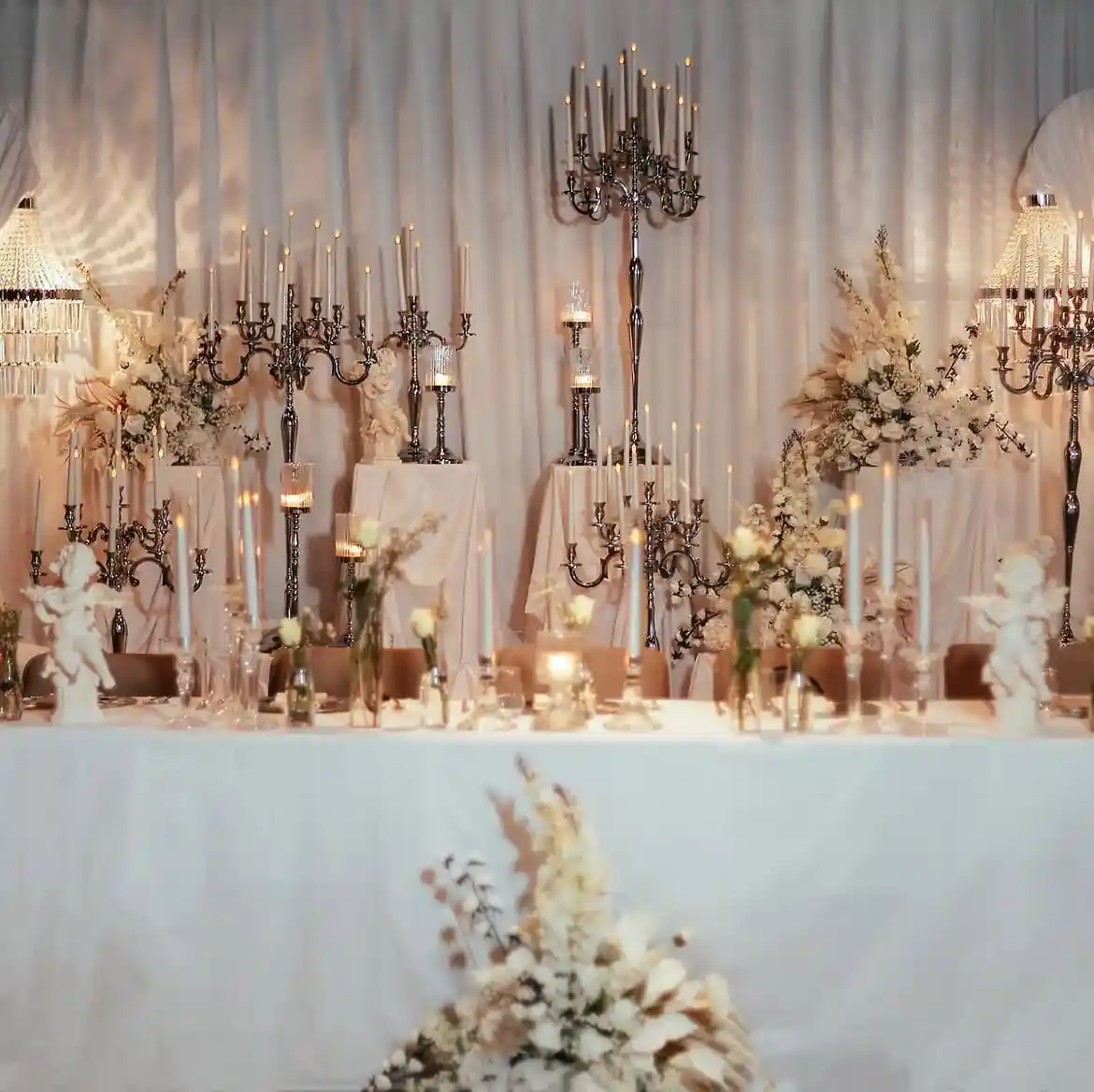
Separate the object from the finished arrangement
A candelabra's stated height may not include the candles or flowers placed on it. Check what the product record actually measures. If you also need base width, opening diameter or overall span, request the missing information rather than estimating it from a photograph.
Camera angle, distance and neighbouring objects change the impression of scale. Do not use another photographed object as a ruler. Recording the dimensions of your own table or display area gives the supplier a clearer basis for discussing whether a size is suitable.
Distinguish size options from set contents
Three vases pictured together are not necessarily sold as a three-piece set. They may illustrate separate sizes or an example arrangement. Read the name, description and set information together, and identify the required quantity of each item on the quotation.
Flowers, candles, plates, linen or another accessory appearing in the image do not automatically come with the product. Mention any required accessory separately and confirm the scope in writing. Do not count an unlisted component as included merely because it appears beside the item.
Resolve conflicting details before approving
If a catalogue and product page show different measurements, share both references or screenshots. Units, size variants or set distinctions may explain the difference. Asking for the 'large model' without identifying the source makes it harder to establish which item you mean.
Surface colour also changes with lighting and screen settings. Use the photograph as a reference, not a definitive finish specification. Recording the model, dimensions, set contents, surface and quantity together in the final confirmation produces a clearer purchasing record.