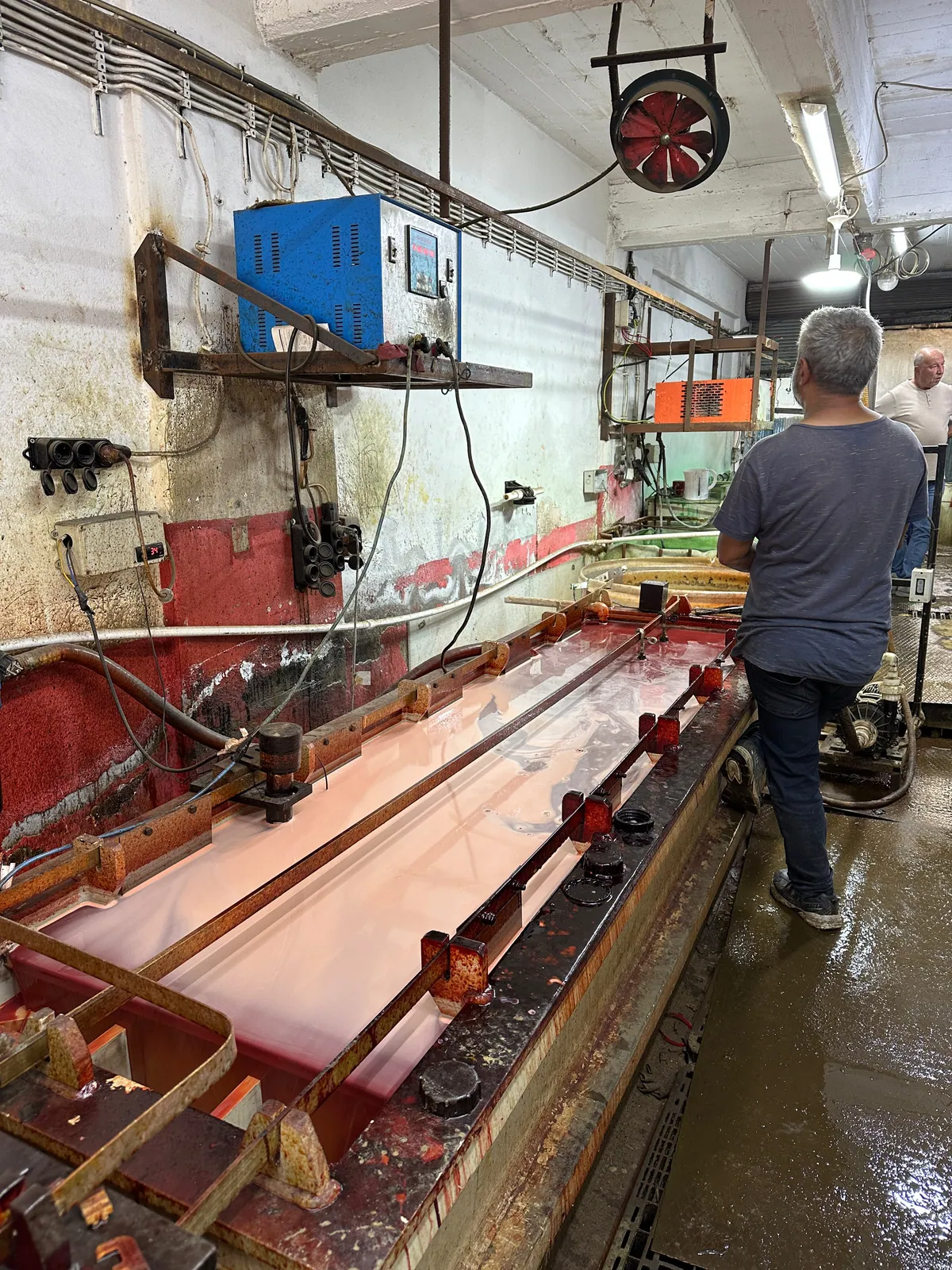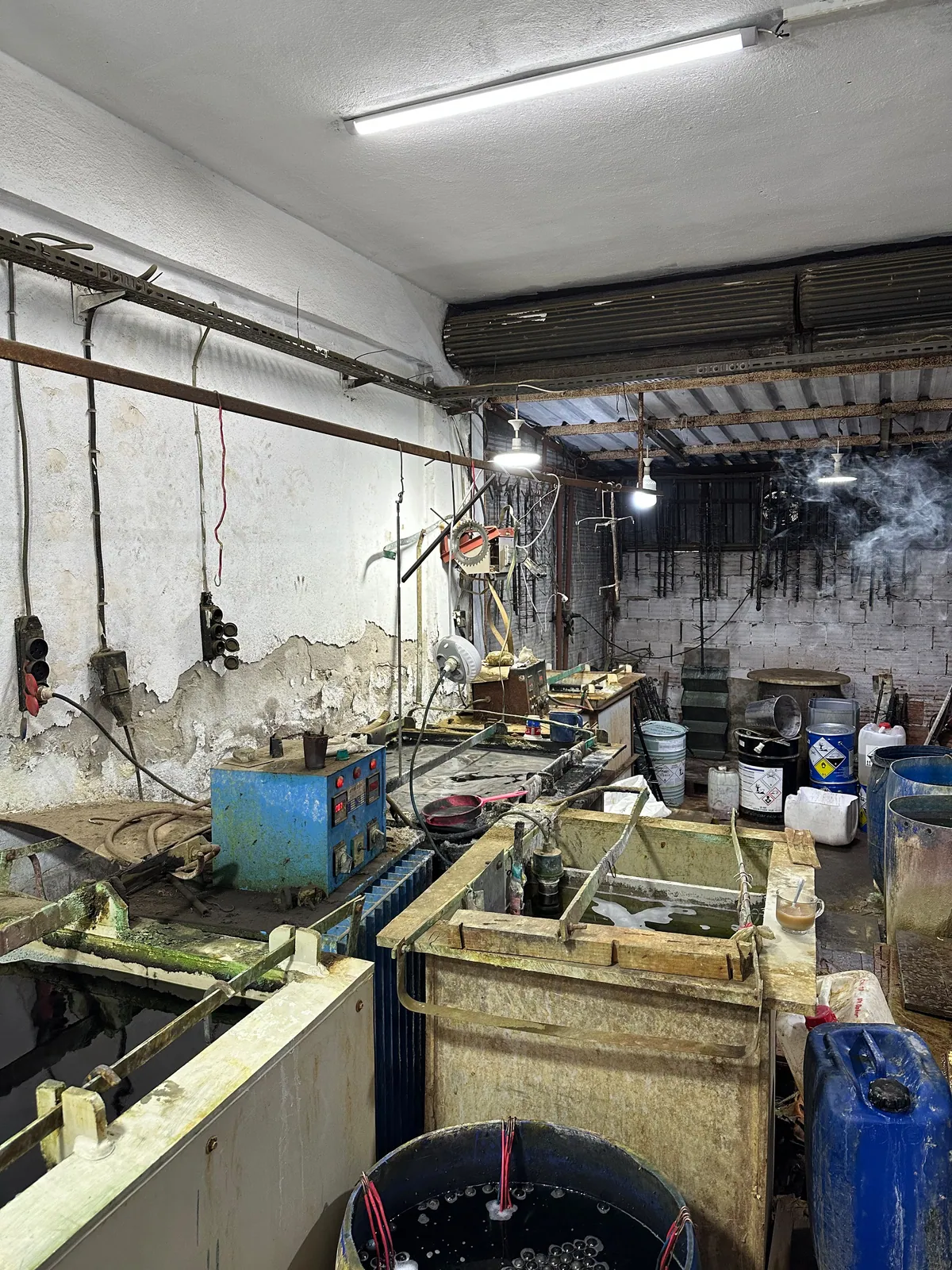
What the production video shows
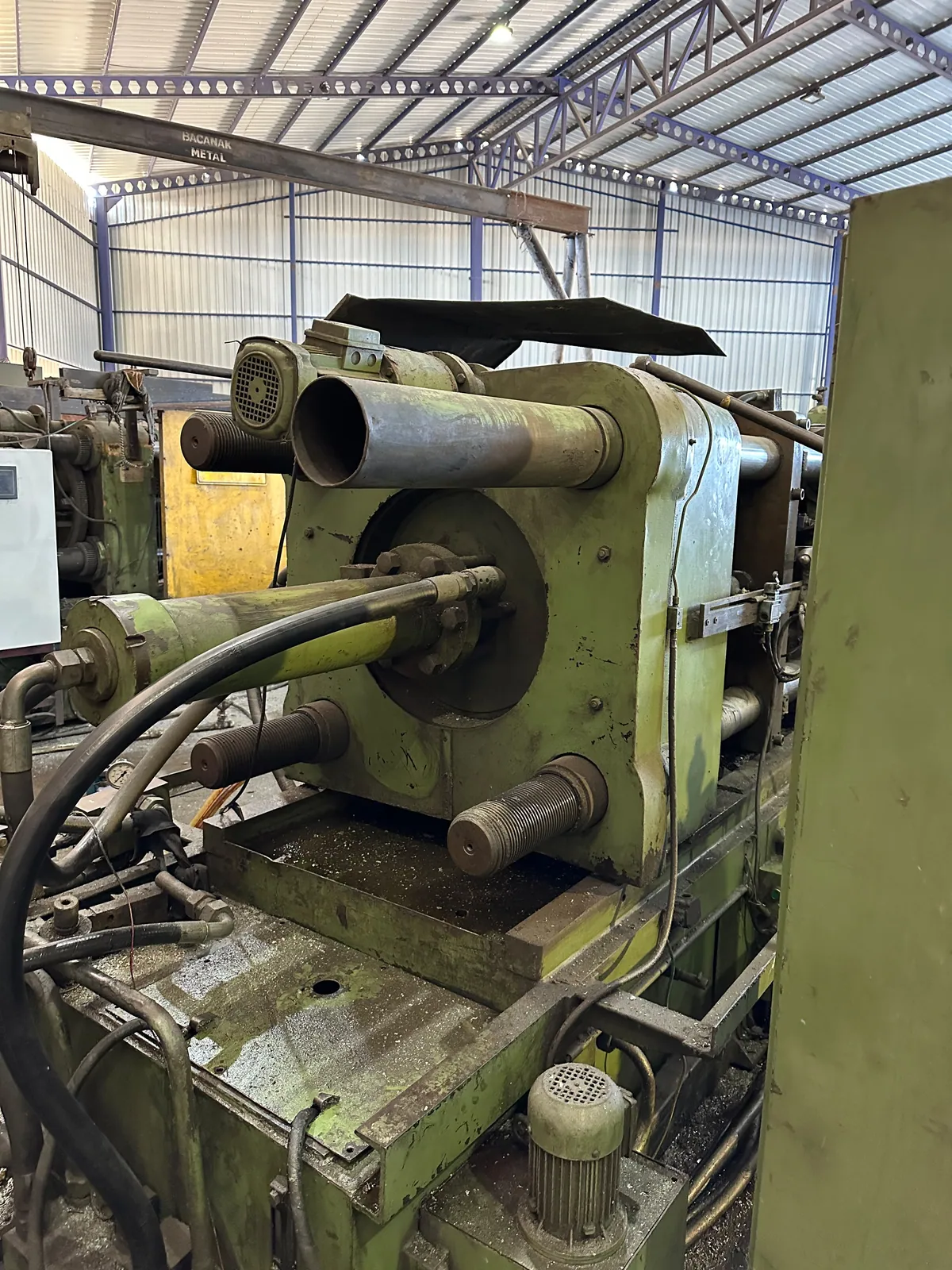
The footage shows a pressure-casting machine and the surrounding foundry. The photographs show moulds stored and used in the workshop. Each mould establishes the main shape of a component. Cast parts then proceed to model-specific machining; the video documents casting rather than the finished decorative coating.
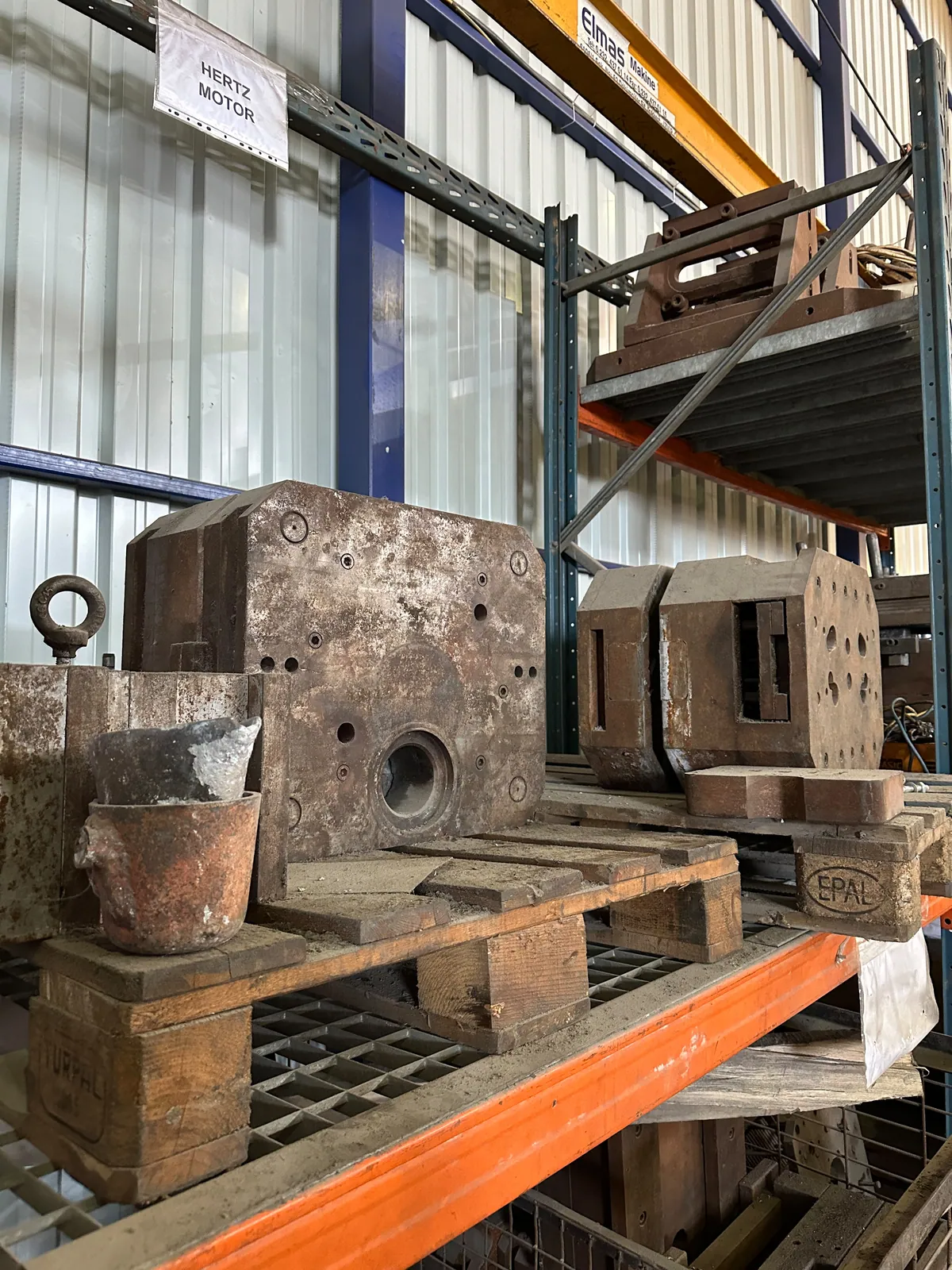
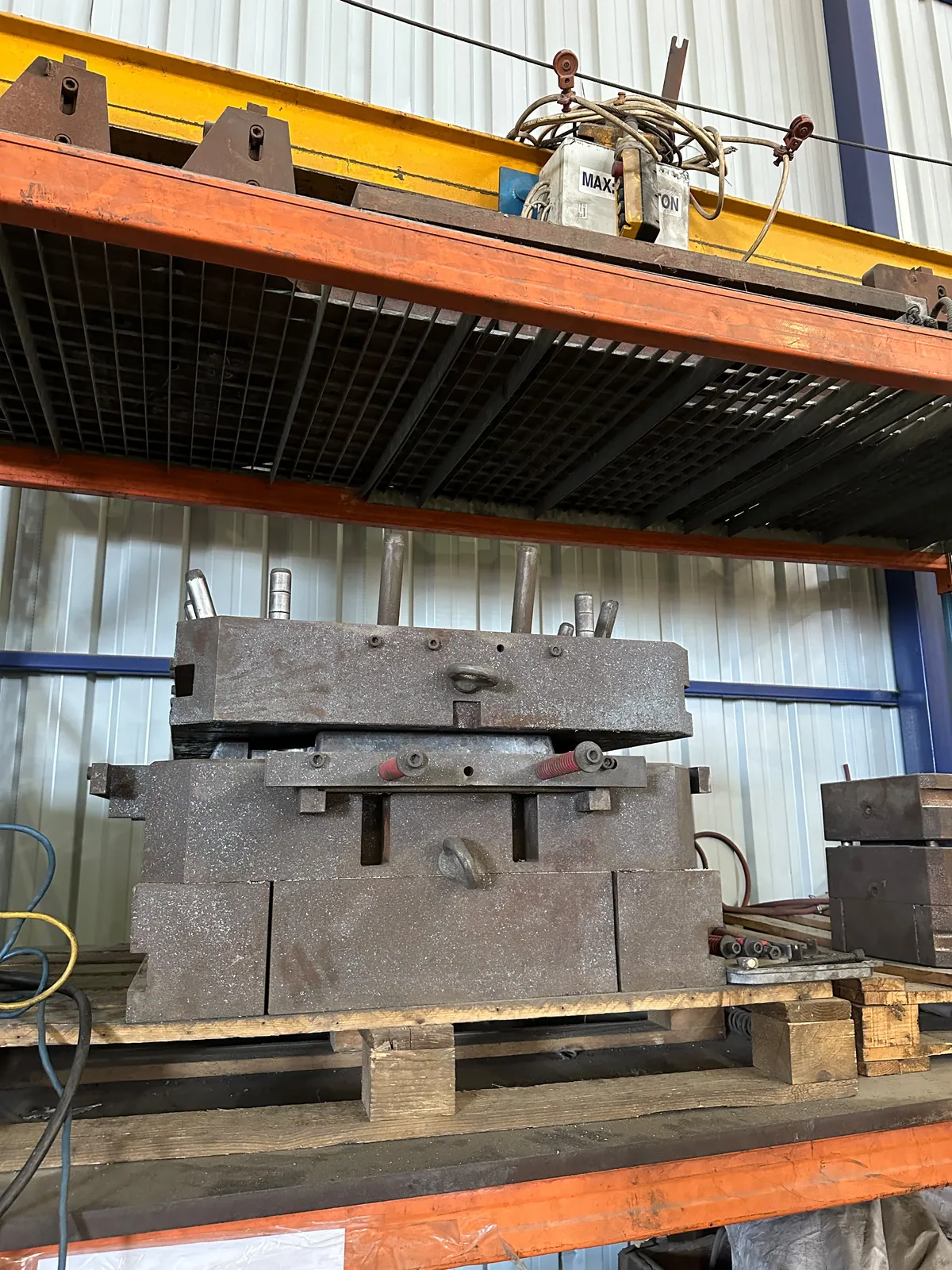
All manufacturing stagesA mould defines the shape of a component
Different candelabra models require different base, stem and arm shapes. Casting moulds establish those geometries and help produce consistent parts within the same model.
These are photographs of actual workshop moulds. Seeing them alongside completed products makes the tooling behind a decorative design easier to understand.
The role of the casting machine
Pressure casting is used at this stage of the Glassy manufacturing route. Prepared aluminium takes shape in the mould, and the released parts are evaluated before further processing.
The equipment visible in the workshop serves different production tasks. A machine photograph does not establish a single setting or cycle time for every candelabra model.
Why the casting needs further work
The casting is the first shaped component, not the final decorative product. Turning prepares connection and dimensional details; polishing and coating complete the surface appearance.
Tooling, machining and surface preparation work together. Assembly and final inspection follow, so the polished appearance of a finished candelabra represents several distinct stages.