Group the enquiries before choosing the range
Record needs that recur in customer conversations: a venue seeking statement centrepieces, a store asking for smaller table accessories or a decorator needing glass in several heights. A social-media like and a confirmed purchase requirement are different signals. Record intended use, requested quantity and unanswered questions separately.
Without sales history, treat the selection as a trial rather than a forecast. Interest in one photograph does not establish the number of units that will sell. Review starting quantities against your budget, display space and identifiable customer requests instead of applying a universal stock formula.
Give each product family a clear purpose
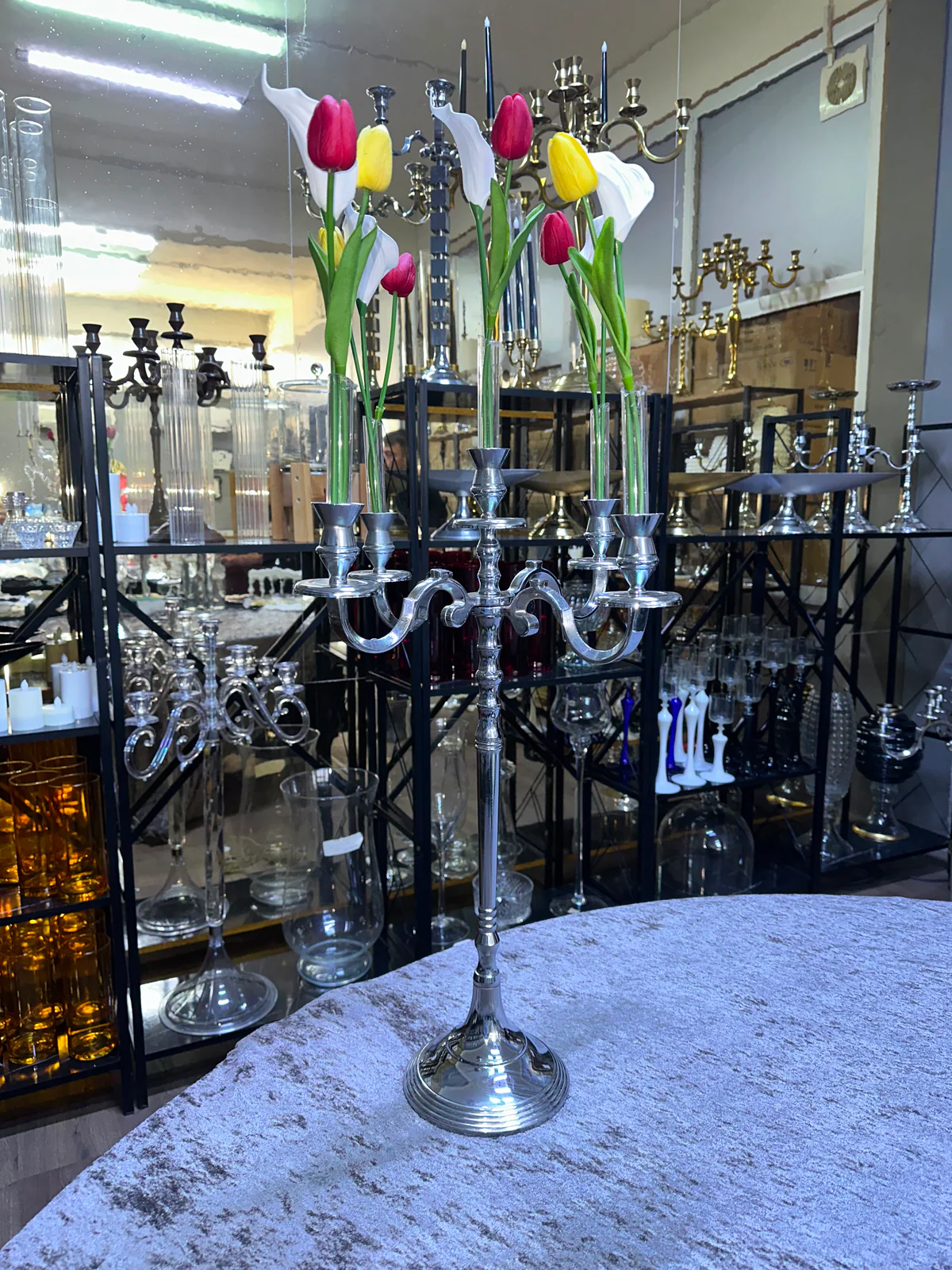
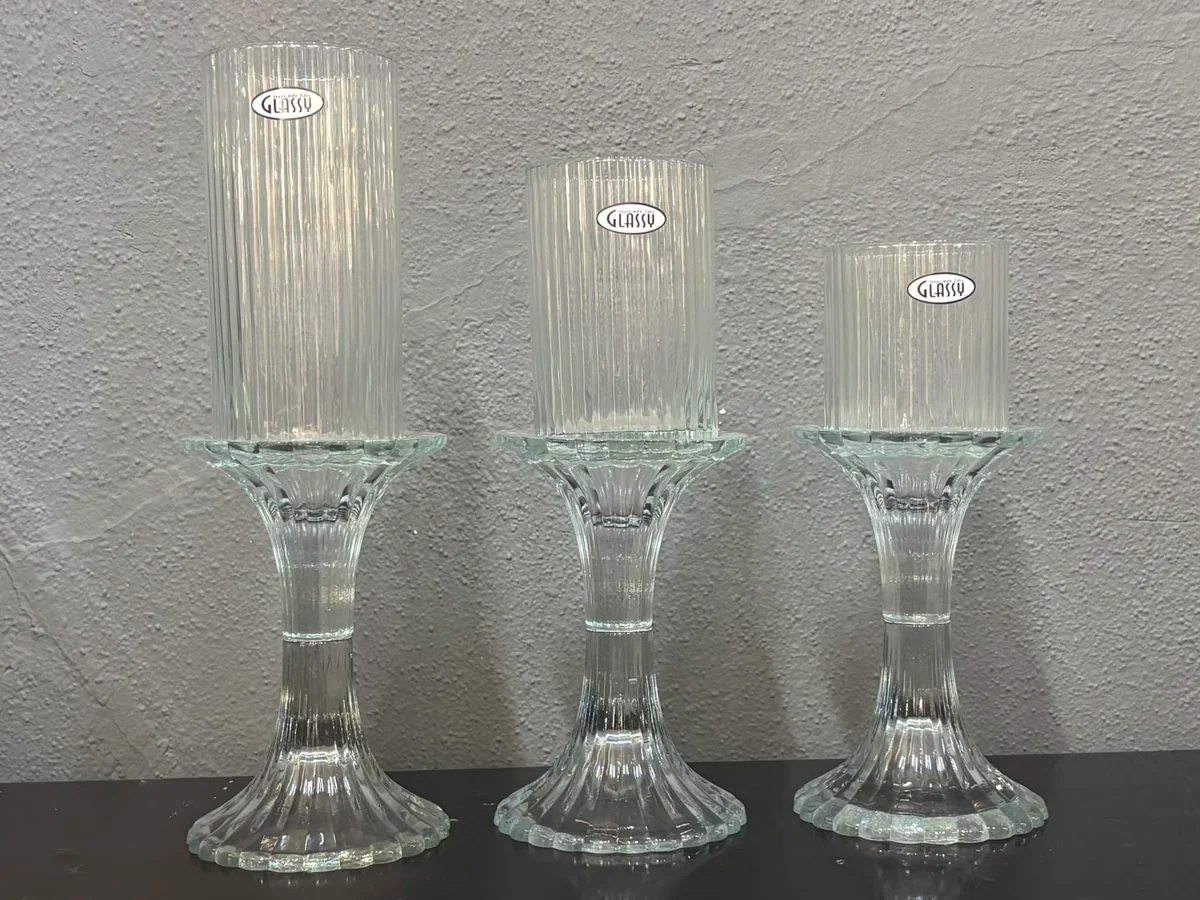
The nine-arm candelabra, 24 cm candle holder, X vase and hexagonal metal charger are catalogue examples of different families, not a ready-made distributor bundle. Assign roles such as a statement centrepiece, a smaller complement and a glass option so customers can understand why the range contains different products.
Rather than adding many models with the same function immediately, choose a range whose differences you can explain. Record which finish or size customers actually request. Colour matching between families and any combined packaging arrangement must be checked separately; the display concept does not establish those conditions.
Separate display pieces from saleable stock
Use distinct statuses for a display piece, units available for customer delivery and models considered only on enquiry. Showing an item in your showroom should not imply that the required quantity is in stock. Sample availability and its conditions also need to be discussed rather than assumed.
Keep your own inventory separate from unconfirmed manufacturer supply. Before a repeat purchase, check whether the same model, size and finish can currently be supplied. This keeps the information you give customers within the scope of what has actually been confirmed.
Use the trial to inform the next order
After initial enquiries, record why a model was not selected as well as what sold: dimensions, finish, intended use or missing information. A request for another height may indicate interest in the family rather than rejection of it. Narrow or extend the next list from those observations without assuming a fixed conversion rate.
For a distribution discussion, share your business activity, selling region, relevant model links and estimated quantities. Pricing, order terms, delivery and the scope of the relationship are discussed separately. This planning method does not promise a return, territorial exclusivity or ready stock.